

Preparing your table
A tidy table helps buyers find the right information fast and keeps your short meeting on track. We show invited suppliers what to bring, how to set it out, and what to avoid on the day.
What this guidance covers
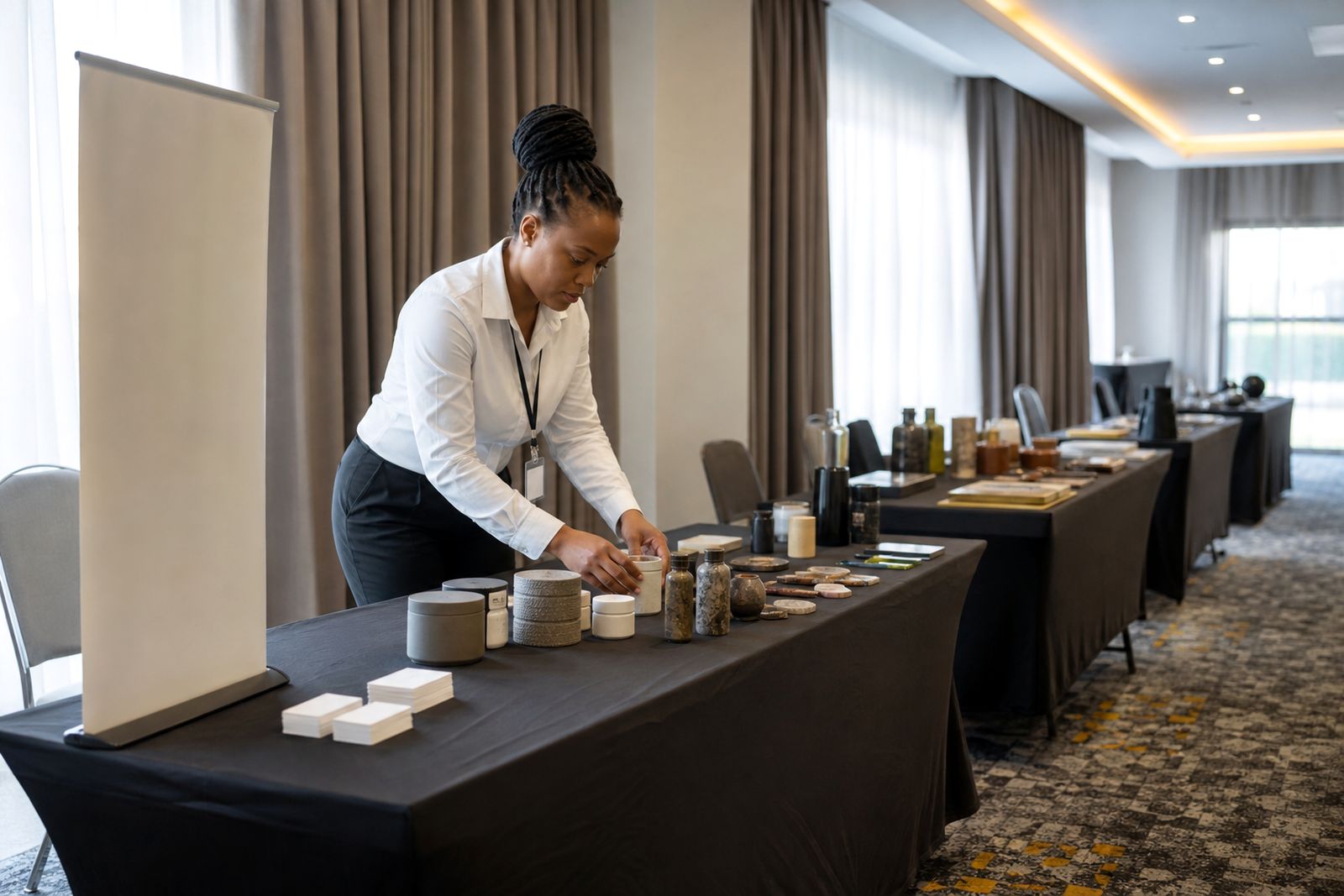
Preparing your table is about making it easy for a buyer to understand who you are, what you supply and what action must happen next. At B2B Expos we give invited suppliers a practical brief before the event, then our team checks table readiness during set-up so the room opens in an orderly way.
This service includes layout guidance, table checks, timing advice and basic presentation rules suited to supplier days for mines, municipalities and retail groups. We focus on simple, useful presentation rather than fancy displays. In most venues you will have limited space, shared power points and a fixed meeting schedule, so your set-up must be neat and quick to read.
- Guidance on what documents to place where
- Advice on samples, catalogues and signage
- Checks for legibility, reach and table flow
- Practical notes for venues with power cuts or restricted plug access
What to bring to the venue
Bring only the items that help a buyer make a decision or pass your details to the right internal team. One A4 company profile, a short product list, current compliance documents where relevant, and a clear contact sheet are usually more useful than a heavy pile of printed material. If you supply physical goods, small labelled samples are better than large display pieces that block sight lines.
Use durable folders if you are travelling from Durban, Gqeberha, Cape Town or other coastal areas where humidity can curl printed sheets. If your samples need power, check in advance whether the venue permits live demonstrations. Many supplier days work best with silent, low-risk displays only. Bring a pen, notepad, spare copies and a small bag for personal items so the table stays uncluttered.
- A4 company profile in a clean sleeve
- Product or service summary with key sizes, lead times or service areas
- Compliance and registration documents that are current and easy to read
- Business cards if you use them, or a printed contact sheet
- Small labelled samples where suitable
- Extension lead only if the event brief says power is available
How to set the table out
Your table should read from left to right in a simple sequence: who you are, what you offer, proof you are ready to supply, and what the buyer should take away. Keep the front edge mostly open so the buyer can place notes or a supplier pack on the table. Put your main sign at the back centre, documents on one side, and samples on the other side. Anything the buyer must take should sit within easy reach.
Avoid tall stands, loose cables, noisy screens and stacks of paper that spread across the whole table. One standing sign is enough. If your samples are heavy or dirty, place a clean mat underneath. It sounds basic but it helps alot when every table in the room follows the same pattern and buyers can move quickly.
- Back centre: company name sign
- Left side: profile, product list and contact sheet
- Right side: samples or a single bound catalogue
- Front corner: takeaway leaflets only if requested in the brief
Step by step on set-up day
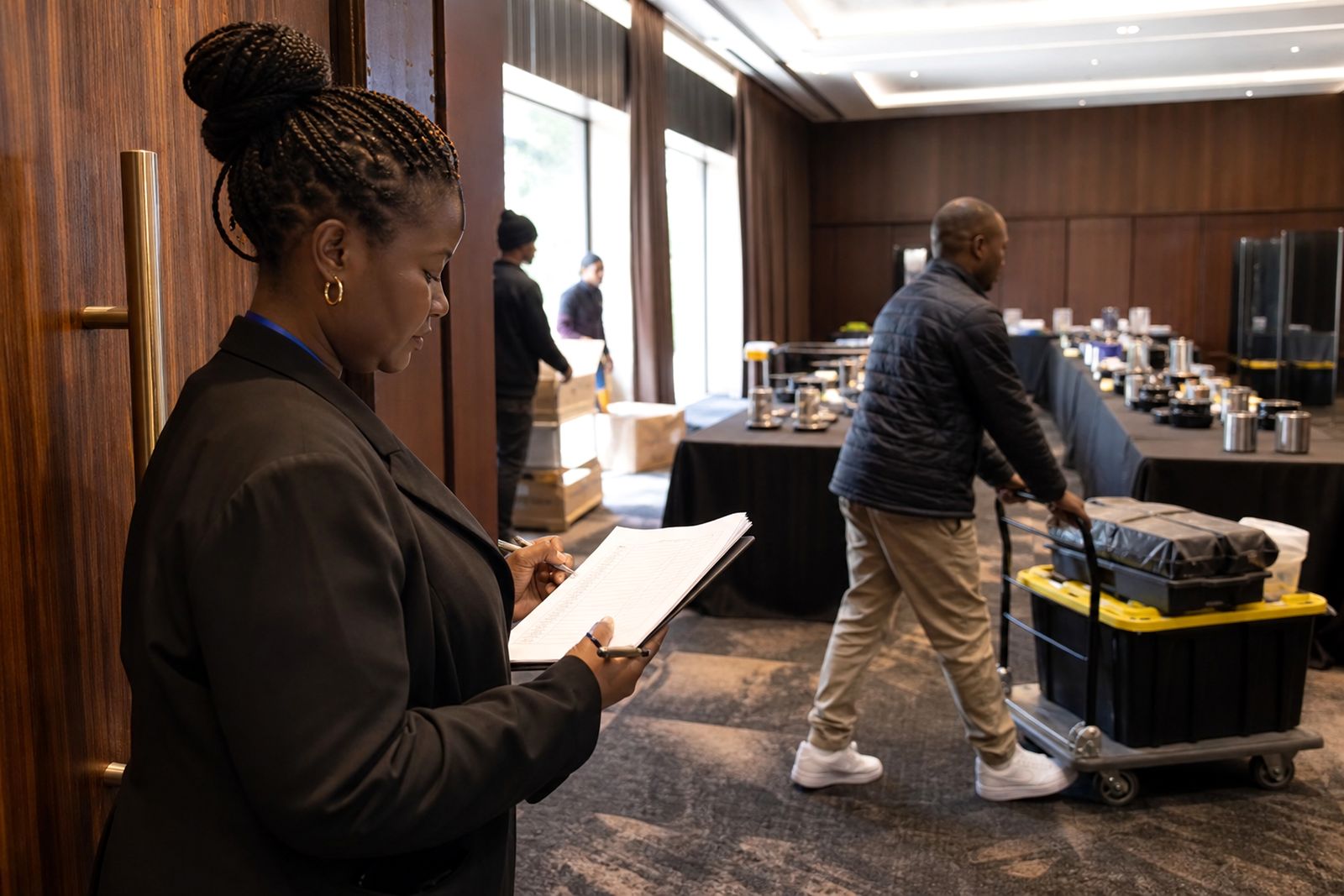
On the day, arrive within the supplier set-up window shown in your invite. Our team will direct you to your table and confirm the layout rules for that venue. If the room is in a civic building, hotel conference area or industrial site, access times and unloading points may differ, so follow the arrival note carefully.
First place your sign and papers, then position samples, then test anything that needs power if power has been approved. Keep boxes under the table or return them to your vehicle if the venue requires clear aisles. Our team will do a quick walk-through to check readability, table spacing and safety. If something blocks movement or makes the table hard to read, we will ask for a small adjustment there and then.
Before doors open, sit or stand where the buyer can approach easily. Keep your opening introduction to under a minute and have your key documents ready. If there is a power cut, continue with print material and samples rather than waiting for screens to restart.
What you must prepare before we meet
Suppliers are responsible for bringing accurate, current information and making sure their own material matches what they actually supply. Check names, registration details, product descriptions and contact information before you travel. If a buyer asks for a follow-up item after the event, your table material should already point to the right product line or service category.
Please prepare your team as well. If more than one person attends, agree who will speak first, who will take notes and who will handle technical questions. Two people can work well at one table, but only if they keep the conversation focused and don't talk over each other.
- Review your printed documents for accuracy and current validity
- Label all samples clearly
- Plan a short ten-minute conversation structure
- Bring your own stationery and any approved adapters
- Wear practical clothing suited to the venue and weather
How pricing works and what happens after
For this service, pricing is usually worked out as part of the overall supplier day arrangement rather than as a separate stand-alone line. The final amount depends on the venue conditions, the level of pre-event guidance needed, the complexity of supplier categories, whether table checks are basic or detailed, and whether printed table materials must be reviewed before the event. Travel and venue-specific handling can also affect the total.
After the event, the buyer receives a tidy supplier pack with the information gathered from the day. Your role is to make sure the material on your table supports that pack clearly. If follow-up is needed, respond through the route set out in the event instructions and use the enquiry form on our contact page if you need help with an upcoming supplier day. We keep the process practical and direct so buyers get usable information, and suppliers are not left guessing what went wrong.
What our Supplier Day customers say
Verified Google reviews
Questions we get asked
Can I bring a pull-up banner?
Only if the event brief allows it and the venue has space. In many supplier days a single table sign works better because it does not block sight lines or walkways.
Should I bring lots of brochures?
Usually no. Bring a small number of clear, relevant documents rather than a large stack. Buyers need the right information quickly, not more paper to carry.
What if my sample needs electricity?
Check the event brief first. Some venues limit plug access or do not allow active demonstrations. Always prepare a printed and sample-based back-up in case of power cuts.
Also worth a look
Plan a supplier day
Send a note through our contact form with the kind of suppliers you want to meet and where, and our team will reply to plan your supplier day.
Open the contact form