

Keeping the schedule tight
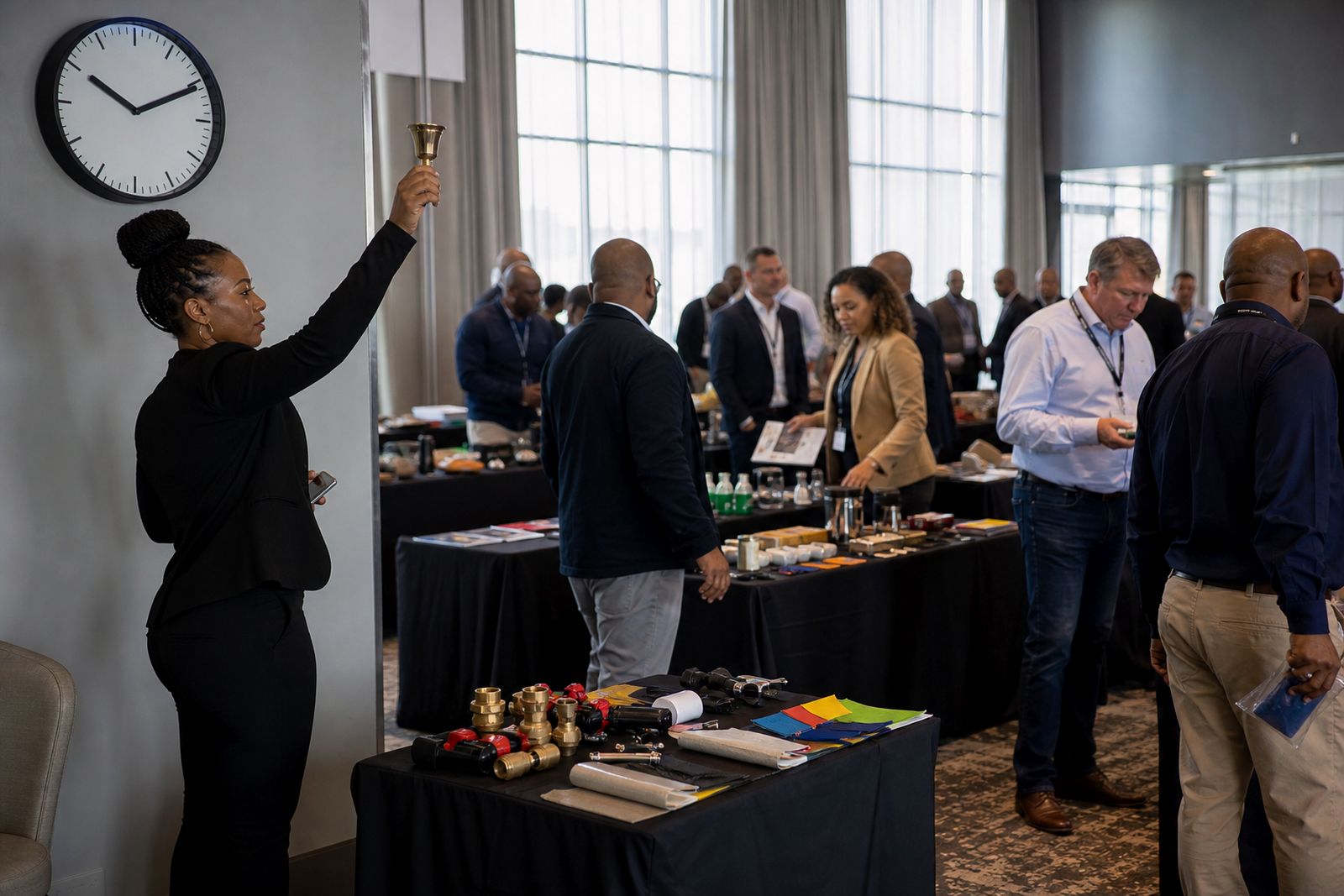
A supplier day only works when the room moves on time and every planned meeting happens. We run the rounds, watch the clock and keep buyers and suppliers moving in a calm orderly way.
What this service covers
Keeping the schedule tight is the operational part of the day that stops good planning from drifting once people arrive. We map the order of meetings, assign table numbers, issue the running sheets and control movement between rounds so that each buyer meets each invited supplier in the planned format. That matters whether the event is in Johannesburg, Durban, Cape Town, Gqeberha, Rustenburg or a smaller town where venue time is fixed and travel windows are tight.
Our role on the day is practical. We confirm who is seated where, announce the start and end of each round, handle late arrivals as neatly as possible and keep the queue clear between sessions. If a buyer needs a short comfort break or a supplier gets delayed at security we adjust the sequence without letting the whole room slip. The aim is simple: no table confusion, no missed introductions, no long dead patches.
- Pre-set running order for all meetings
- Buyer and supplier table allocation
- Round timing and room announcements
- Late arrival handling and small sequence changes
- Attendance checks against the planned list
- Notes for the supplier pack after the event
How the rounds are planned before the doors open
The schedule is built before the day, not guessed in the room. Once the buyer list and supplier list are signed off, we prepare the meeting grid and decide how movement will work. In some venues the buyer stays seated while suppliers rotate. In others, where access lanes are narrow or tables are fixed, we may hold buyers in one row and route suppliers around the outside. Coastal venues sometimes need a little more spacing for materials and samples because damp cartons and curled paper can slow table changes if the room is cramped.
We also factor in registration, tea breaks, security access and any venue rules around loading, parking and cut-off times. Where power cuts are a known risk, printed running sheets and manual timekeeping are prepared so the day can continue without relying on screens. The plan is shared in a clear format so your team knows the flow before the first supplier signs in.
- Meeting matrix prepared from the final attendance list
- Rotation method chosen for the venue layout
- Breaks placed to avoid bunching and late returns
- Contingency plan for power cuts or delayed access
- Signage order matched to table numbers and room entry points
Step by step on the day
We start by checking the room against the running plan. Tables are numbered, buyer places are marked and supplier traffic paths are tested so people are not crossing in front of active meetings. Registration is then checked against the final list and any no-shows are flagged early. That gives us time to close small gaps before the first round starts.
Once the room is live we keep time visibly and consistently. Each round is opened with a clear instruction, a halfway warning if needed and a firm close so the next supplier can move in. We do not leave transitions to chance. One operator watches the clock while another tracks movement and resolves quick issues such as a missing chair, a misplaced sample bag or a supplier who has sat at the wrong table.
If a meeting runs over we step in politely and move the room forward. If a buyer requests a private follow-up after the round, that is noted for the supplier pack rather than letting the live schedule drift. This sounds small, but in practice it is what keeps a full day from losing shape by mid-morning.
What the client must prepare
To keep the schedule tight, the buyer side must lock a few essentials in good time. The biggest cause of avoidable delays is late changes to attendee names, room layout or access rules. We can work around surprises, but the cleaner the input, the smoother the day. If the venue sits inside an industrial site, office park or civic building with security controls, we also need the entry process clearly confirmed.
- Final buyer attendee list and roles
- Final approved supplier invite list
- Venue address, access times and parking instructions
- Room layout confirmation and table count
- Any security, induction or sign-in requirements
- Preferred break times and close-out time
- Any categories that need special handling, such as bulky samples or chilled items
Please also prepare one internal decision-maker for quick approvals on the day. When a late supplier arrives or a buyer is called out briefly, a fast call helps keep the flow intact. One clear contact saves time and avoids mixed instructions from several people at once, which can get messy quickly.
How pricing is worked out
Pricing is based on the shape of the event rather than a one-size-fits-all rate. We look at the number of buyer tables to be managed, the expected meeting flow, the venue complexity, travel requirements and whether support is needed only on the day or also for planning and supplier coordination beforehand. A straightforward hotel conference room in a major city is different from a site with strict access windows, long walking distances or limited set-up time.
We also consider how much schedule control is required. Some buyer teams only need timing and table movement. Others want full operational cover including sign-in support, floor control, printed meeting sheets and structured notes for the pack afterwards. If the event runs across multiple sessions in one day, or if there are parallel rooms, that also affects the scope. We keep the pricing clear and itemised so you can see what is included.
Aftercare and handover
The work does not stop when the last round ends. We reconcile the attendance list, note any missed meetings, record useful follow-up actions and hand over clean information for the supplier pack. That helps the buyer team remember who attended, who arrived late, which conversations need another slot and where documentation was requested. A tidy record is especially useful when several internal stakeholders attended different tables and need one aligned summary later.
Where needed, we also flag practical lessons for the next supplier day, such as room size, transition spacing or break timing. Small fixes make a big difference next time. The result is a supplier day that feels controlled, fair and worth the travel for everyone in the room.
What our Supplier Day customers say
Verified Google reviews
Questions we get asked
Can you handle late arrivals without disrupting the whole event?
Yes. We build the running order so small changes can be absorbed where possible. If someone is delayed, we resequence carefully and note any missed meeting for follow-up rather than letting every later round slip.
Do buyers stay seated or do suppliers move between tables?
Usually the buyer stays seated and suppliers rotate, because that keeps decision-makers in place and makes the room easier to control. If the venue layout suggests another method, we will recommend it before the day.
What do you need from us to finalise the schedule?
We need the final buyer attendee list, the approved supplier invite list, venue access details, room layout confirmation and one clear client contact for quick decisions. The more settled those details are, the smoother the rounds will run.
Also worth a look
Plan a supplier day
Send a note through our contact form with the kind of suppliers you want to meet and where, and our team will reply to plan your supplier day.
Open the contact form