

Table set-up
A supplier day runs better when the room is easy to read from the door and simple to move through. We plan the table layout, signage and flow so buyers can keep time and suppliers know exactly where to go.
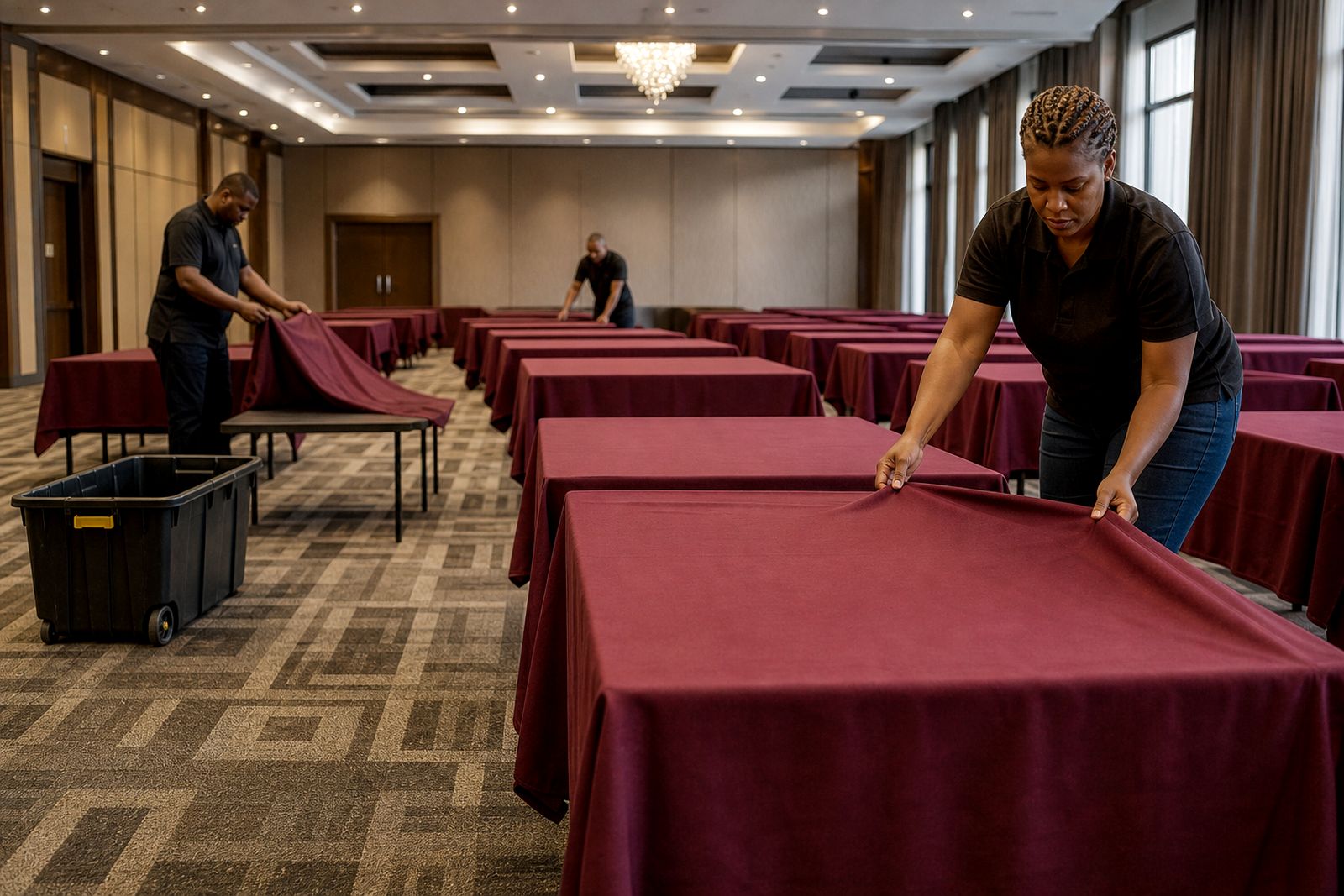
What is included in table set-up
Our table set-up service covers the practical room layout for a supplier day, from the first floor plan to the final check before doors open. We work around the venue shape, entry points, power points, tea station position and any building rules so the day starts cleanly and stays orderly.
For buyer teams this means one point of control. For suppliers it means a labelled place to report to, a clear route to follow and enough working space for samples, brochures and short discussions.
- Room layout plan with buyer table positions and supplier table numbering
- Registration point placement and directional signage inside the venue
- Spacing for walkways, queues, sample handling and refreshment access
- Seat and table allocations matched to the running order
- Set-up supervision on site before arrival time
- Final readiness check with buyer representatives before the first meeting slot
How we lay out the room
We start with the buyer’s meeting format. Some clients want one buyer team seated throughout while suppliers rotate. Others prefer category tables or separate areas for services, consumables and site support. In municipal venues and mine training rooms the shape of the room can matter more than the size, so we build the layout around sightlines and movement rather than trying to fit in too many tables.
As a guide, we allow enough width for people to pass each other without knocking samples or bags. Main walkways are usually planned at about 1.5 to 2 metres where space allows, with smaller side access routes where needed. Standard trestle-style tables of around 1.8 metres work well for most supplier pitches, while round tables are useful for slower discussions with larger document packs. If there may be power cuts we place any printing or laptop-dependent activity close to confirmed power points or backup supply if the venue has it.
In coastal venues we also think about humidity and wind from open doors. Paper packs, name cards and light signage need to stay put, and product samples should not block fire exits or make the room feel cramped.
The process on the day, step by step
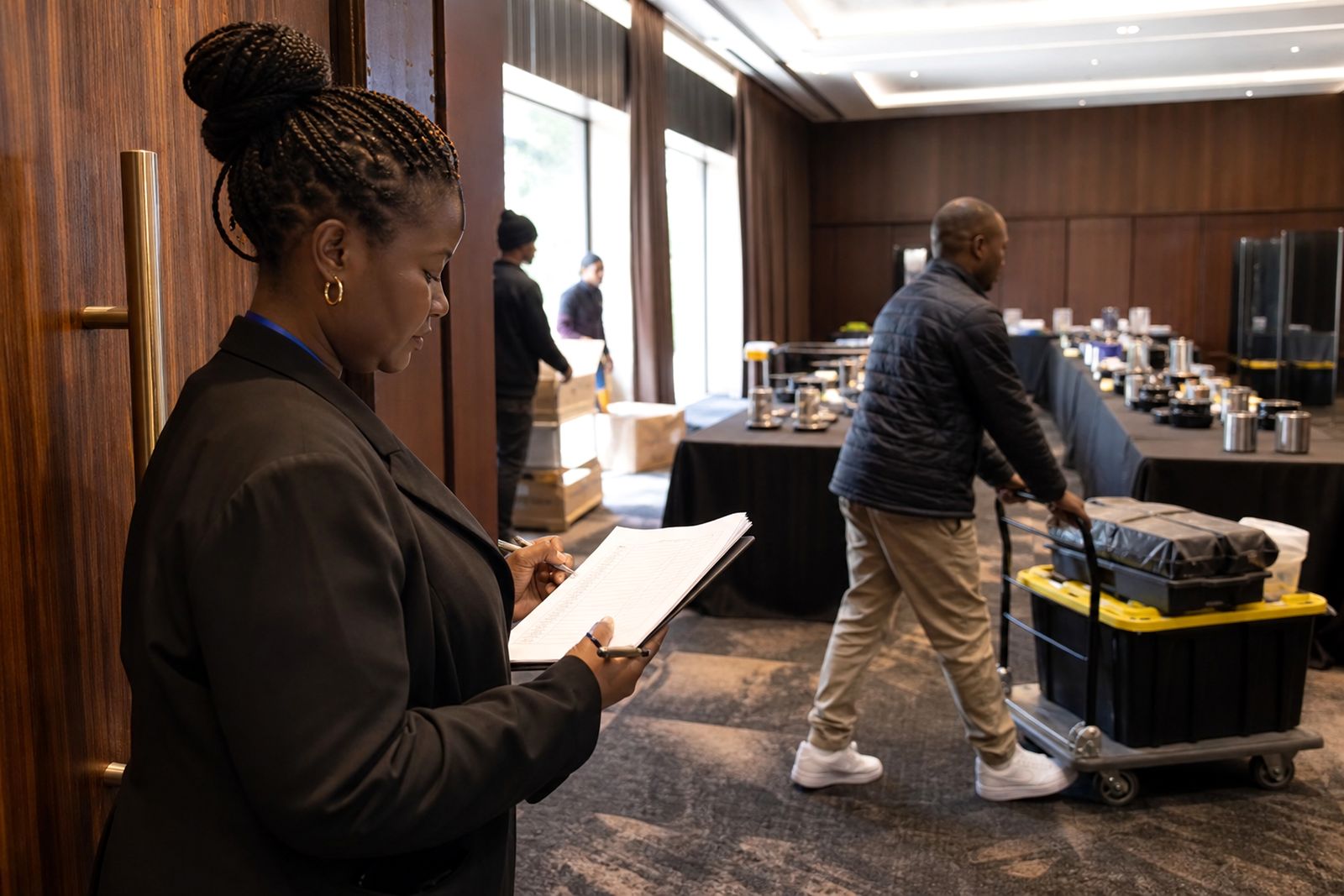
On the event day our team works to a set sequence so there is no guessing once the venue opens. We check the room against the approved floor plan, place tables and chairs, confirm numbering and then test the route from registration to the first meeting point.
- Arrive for venue access and confirm handover with site contact
- Mark out table positions and buyer seating areas
- Place table numbers, category signs and directional signs
- Set registration area, waiting area and document drop point
- Walk the route as a supplier would, then as a buyer would
- Correct pinch points, noise issues or blocked access
- Brief the floor coordinator and open the room for arrivals
Once suppliers begin arriving, we direct them to their assigned places and keep spare stationery, tape and labels ready for quick fixes. A late supplier, a room change or an unexpected support person can upset timing if nobody takes control. We do that control quietly and early so the buyer team can focus on meetings.
What the client must prepare
To set the room properly we need a few items from the buyer side in advance. The earlier these are confirmed, the less time is lost with changes at venue access. We do not need polished event material, but we do need clear decisions on who is meeting whom and how formal the room should feel.
- Venue address, access times and room dimensions if available
- Expected number of buyer representatives and supplier invitees
- Preferred meeting format and slot length
- Any site rules for parking, security, sample movement or photography
- Whether tea, lunch or comfort breaks will be in the same room or outside
- List of reserved seats for procurement, operations or technical roles
If the venue has strict municipal or corporate access controls, the client should also arrange gate lists and loading instructions. In some sites there are limits on extension leads, free-standing signs or food inside meeting rooms so it helps when we know that early. A simple room sketch is often enough, no fancy plan needed.
How pricing is worked out
Pricing is based on the amount of set-up work rather than a flat one-size rate. A simple supplier day in one boardroom is different from a multi-room programme with staggered arrivals, security clearance and separate waiting areas. We price according to the venue conditions, the number of tables to be managed, travel from Johannesburg if needed, the set-up window and the level of on-site coordination required.
Items that usually affect cost include distance, parking arrangements, furniture already available on site, printing volume for signs and table cards, and whether the team must return after lunch to reset the room for a second session. Where a venue is already well equipped and access is straightforward, the set-up is faster and the cost is usually lower. Where access is tight or the room must be turned around quickly between sessions, more coordination time is needed.
We explain the cost structure in plain terms so the buyer can see what is included and what sits outside the scope.
Aftercare and handover
Once the last meeting ends we do not just pack up and leave. We check that buyer notes, supplier documents and any sign-in material are gathered in order and passed into the next stage for the supplier pack. Lost labels, mixed papers and unmarked samples can create admin problems later, so we sort these before breakdown is complete.
After the event we confirm any room issues that affected timing, note no-shows or late arrivals that changed table use, and flag layout improvements for the next supplier day. This is especially useful when the same buyer runs recurring sessions in different towns such as Johannesburg, Durban, Gqeberha or Cape Town.
The result is a room that worked on the day and a cleaner handover for follow-up afterwards. It sounds basic but good set-up saves time where it matters most.
What our Supplier Day customers say
Verified Google reviews
Questions we get asked
Do you provide the tables and chairs?
Where the venue supplies furniture, we work with what is on site. If extra furniture is needed, we scope that with the client as part of the event plan.
Can you handle last-minute room changes?
Yes, if access and timing allow. We rework the layout around the new room and keep the meeting flow as close as possible to the original schedule.
What if suppliers bring samples or extra people?
We allow for basic sample space in the layout and manage arrivals on site. If large samples or additional attendees are expected, the client should tell us in advance so we can plan wider spacing.
Also worth a look
Plan a supplier day
Send a note through our contact form with the kind of suppliers you want to meet and where, and our team will reply to plan your supplier day.
Open the contact form